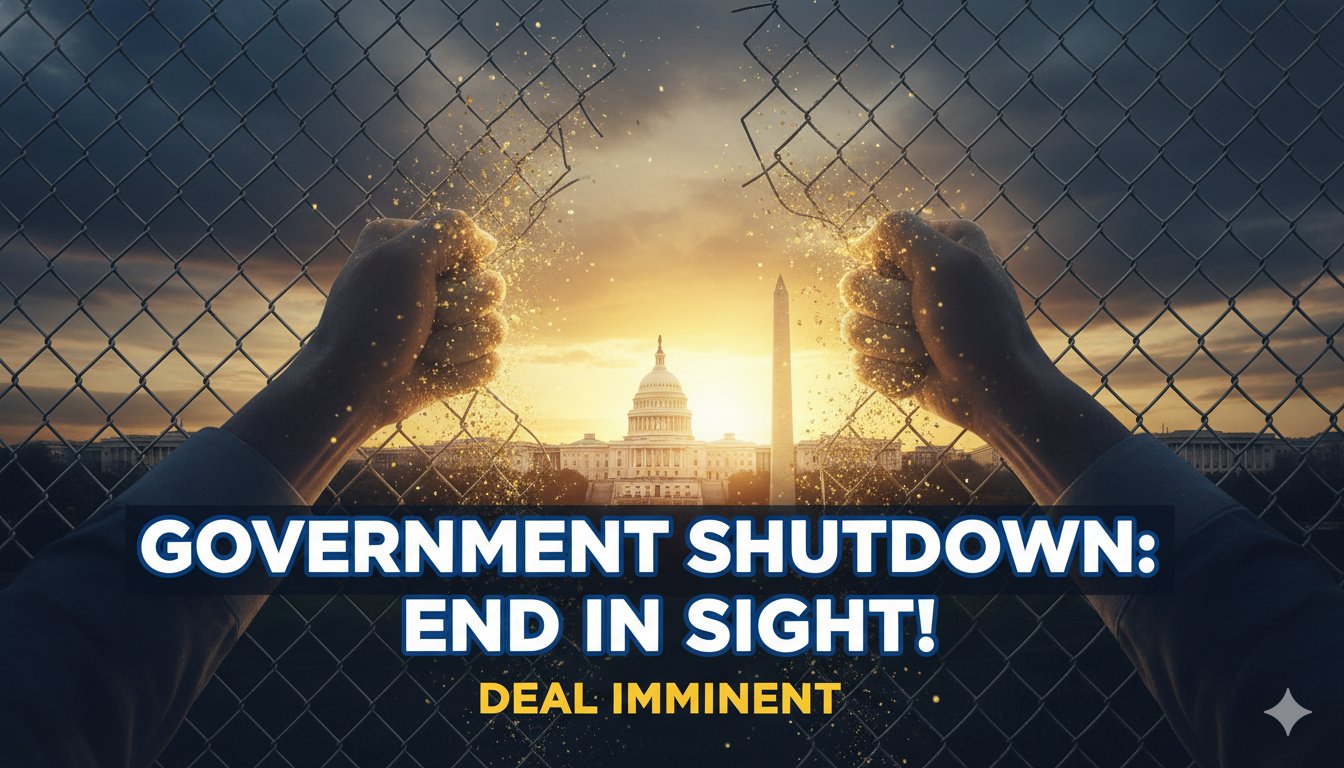
“Lawmakers in Congress are on the verge of passing a bipartisan funding package to resolve the ongoing partial government shutdown, which affects key departments including Defense and Homeland Security, with a focus on negotiating restrictions on immigration enforcement; economic repercussions remain limited due to the brief duration, but prolonged delays could impact federal workers’ paychecks, small business loans, and consumer spending.”
Path to Resolution
Congressional leaders have signaled strong momentum toward ending the partial shutdown that began after funding lapsed for several federal agencies. The Senate has already approved a comprehensive spending measure that includes full-year appropriations for five major bills covering areas such as financial services, defense, labor, health and human services, transportation, housing, urban development, state operations, and foreign affairs. A temporary extension for the Department of Homeland Security funding stretches two weeks, providing a window to address contentious issues surrounding immigration policies.
House leadership anticipates a floor vote imminently, with expectations that the package will garner sufficient support from both parties. Republican leaders have expressed confidence in securing the necessary votes, emphasizing the need to avoid extended disruptions. The agreement stems from negotiations aimed at incorporating reforms to immigration enforcement practices, including mandates for body cameras and transparency measures for agents. This compromise reflects a broader effort to balance security priorities with oversight demands.
Economic Implications
The partial shutdown’s financial toll on the broader economy is projected to be modest, given its limited scope and anticipated short duration. Analysts estimate that a brief lapse could reduce gross domestic product by a fraction of a percentage point, primarily through temporary halts in non-essential government operations and delayed payments to contractors. For instance, the Congressional Budget Office’s models suggest that even a multi-week extension might result in cumulative losses under 1% of annual GDP, with most impacts reversed upon reopening due to backpay disbursements.
Consumer spending, a key driver of economic growth, faces minor headwinds as furloughed federal employees curtail discretionary purchases. Historical precedents indicate that such effects are fleeting, with rebound spending often offsetting initial declines. Small businesses reliant on federal loans or guarantees could experience delays in processing, potentially stalling investments or expansions. The U.S. Small Business Administration has noted similar interruptions in prior funding gaps, where billions in loan approvals were postponed, affecting thousands of enterprises.
In the defense sector, procurement and maintenance activities for military equipment might slow, indirectly influencing suppliers and manufacturers. Transportation infrastructure projects, including highway repairs and airport upgrades, could see temporary pauses, though essential safety operations continue uninterrupted. Overall, the economy’s resilience is bolstered by the fact that unaffected agencies, such as those handling veterans’ affairs and environmental protection, maintain full functionality, preserving critical services.
Market Reactions
| Affected Departments | Key Impacts on Operations |
|---|---|
| Department of Defense | Non-essential procurement delayed; essential military operations continue; potential contractor payment holds. |
| Department of Homeland Security | Immigration enforcement negotiations ongoing; border security and disaster response funded temporarily; FEMA reserves sufficient for current needs. |
| Department of Transportation | Air traffic control staffed but unpaid; infrastructure grants paused; aviation safety inspections prioritized. |
| Department of Housing and Urban Development | Housing assistance programs slowed; new loan approvals delayed for homebuyers and developers. |
| Department of Labor | Employment data releases potentially postponed; worker training initiatives halted. |
| Department of Health and Human Services | Research grants interrupted; public health monitoring continues; Medicare and Medicaid unaffected. |
Financial markets have shown muted responses to the shutdown, reflecting investor confidence in a swift resolution. Major stock indices have experienced only slight volatility, with declines in defense and transportation-related stocks offset by gains in sectors less tied to federal spending. Bond yields remain stable, as Treasury operations are exempt from the lapse, ensuring uninterrupted debt issuance and payments.
Investors are monitoring the situation closely, drawing parallels to previous shutdowns where prolonged uncertainty led to broader sell-offs. However, current sentiment leans positive, with futures markets pricing in minimal long-term disruption. Currency traders note that the dollar’s strength persists, supported by robust private-sector activity that outpaces government dependencies. Commodity prices, particularly in energy and agriculture, show resilience, as unaffected departments like Agriculture continue to oversee subsidies and trade programs.
Credit rating agencies have issued cautious statements, warning that an extended impasse could erode fiscal credibility, though no immediate downgrades are anticipated. Hedge funds and institutional investors are positioning for a rebound, increasing holdings in cyclical stocks expected to benefit from restored government contracts.
Impact on Federal Workers and Contractors
Hundreds of thousands of federal employees in affected agencies are either furloughed or working without immediate pay, creating personal financial strains. Essential personnel, such as air traffic controllers and border agents, must report for duty but face delayed compensation, potentially leading to increased reliance on credit or savings. Backpay is guaranteed by law upon resolution, but the interim period can exacerbate household budgets, especially for those in high-cost living areas.
Contractors face unique challenges, as many lack the backpay protections afforded to direct employees. Defense contractors, for example, might halt work on non-critical projects, resulting in revenue shortfalls and possible layoffs. The ripple effect extends to local economies near federal installations, where reduced spending by workers impacts retail, dining, and service industries.
Support measures from credit unions and banks include deferred loan payments and low-interest advances for affected individuals. Labor unions representing federal workers are advocating for expedited resolution, highlighting the morale and productivity toll of repeated funding crises.
Broader Fiscal Context
This shutdown underscores ongoing debates over federal budgeting processes, with calls for reforms to prevent recurring lapses. The fiscal year 2026 appropriations highlight tensions between spending priorities, including defense allocations amid global uncertainties and domestic programs addressing housing and health needs. The temporary DHS extension allows focused negotiations on immigration reforms, aiming to implement safeguards without compromising enforcement capabilities.
Analysts point to the shutdown as a symptom of divided government, where partisan divides over policy riders complicate straightforward funding bills. Future budget cycles may incorporate automatic continuing resolutions to mitigate such risks, ensuring operational continuity.
Sector-Specific Effects
In aviation, while flights operate normally, unpaid controllers could lead to fatigue-related risks if the shutdown persists. Nutrition programs remain intact, shielding vulnerable populations from immediate harm. Disaster response capabilities, bolstered by pre-allocated funds, position agencies like FEMA to handle ongoing winter storms without interruption.
The shutdown’s partial nature spares entitlements like Social Security and Medicare, maintaining payments to millions of recipients. Postal services continue unabated, preserving commerce and communication channels.
Disclaimer: This is a news report for informational purposes only. No tips are provided. Sources are not mentioned.