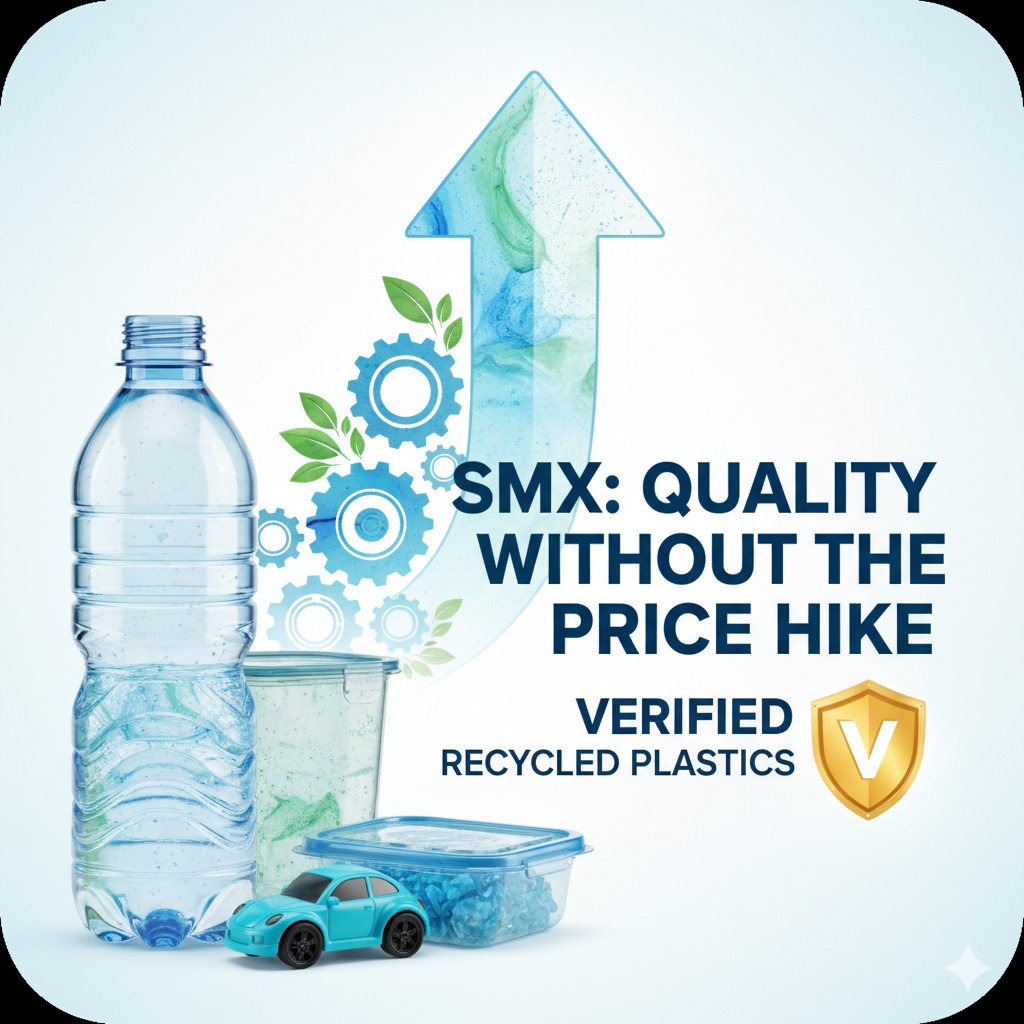
In a breakthrough for sustainable manufacturing, SMX’s molecular marking technology enables verifiable recycled plastics that maintain high quality across multiple cycles, allowing manufacturers to reduce reliance on costly virgin materials amid volatile energy prices—ultimately delivering eco-friendly products to consumers without inflating retail prices. This innovation transforms recycled content from an uncertain alternative into a reliable, cost-effective resource, bridging environmental goals with economic realities.
The Shift Toward Verified Circularity in Plastics
The plastics industry has long grappled with a fundamental challenge: recycled materials often come with uncertainty. Without reliable ways to confirm origin, composition, and quality through repeated processing, manufacturers hesitate to incorporate high percentages of recycled content. This reluctance stems from risks to product performance, regulatory compliance, and brand reputation. Traditional recycling relies on paperwork, sorting assumptions, and limited testing, which fail to provide ironclad proof—especially for demanding applications like food-grade packaging or durable goods.
SMX addresses this gap head-on with its proprietary molecular marking system. The technology embeds a permanent, invisible marker directly into polymers at the molecular level during production or compounding. This marker survives melting, reprocessing, and multiple lifecycle stages without degradation. Detection occurs via specialized readers that scan the material, revealing precise data on recycled content percentage, origin, and history. Unlike surface labels or additives that can wear off or contaminate, the marker becomes an intrinsic part of the plastic itself.
This capability proves particularly valuable now, as energy price fluctuations drive up costs for virgin plastic production. Oil and gas volatility directly impacts petrochemical feedstocks, pushing virgin resin prices higher and pressuring manufacturers to pass those increases to consumers. By authenticating recycled inputs, SMX enables greater substitution of verified post-consumer or post-industrial plastics. Manufacturers gain confidence in performance consistency, reducing the need for energy-intensive virgin material and helping stabilize input costs.
Recent deployments highlight the technology’s real-world impact. Partnerships in the United States focus on recycled PET (rPET), incorporating FDA-compliant markers suitable for food-contact applications. These initiatives allow bottlers, packaging producers, and consumer goods companies to certify recycled content percentages accurately, meeting escalating regulatory demands for transparency without sacrificing material integrity.
Economic Benefits for Manufacturers and Supply Chains
The verification layer unlocks measurable savings. Recycled plastics, when unverified, often trade at discounts due to perceived risks—but verified streams command premiums because buyers trust the data. SMX’s system turns recycled content into a traceable asset, potentially increasing its value over time as it circulates through verified cycles.
Key advantages include:
Cost Mitigation : Lower dependence on virgin resins exposed to energy market swings.
Compliance Efficiency : Direct, auditable proof for recycled content mandates in regions like California and the EU.
Supply Chain Resilience : Reduced vulnerability to feedstock shortages or price spikes.
Quality Assurance : Consistent performance across reprocessing, minimizing defects and waste.
In practice, this means a packaging producer can confidently blend 50% or more verified rPET into bottles, knowing the material meets specifications without extensive additional testing. The same applies to textiles incorporating recycled synthetics or automotive components using engineering plastics.
Performance Parity and Consumer Impact
One of the most significant achievements is maintaining quality standards equivalent to virgin materials. The molecular marker does not alter physical properties like tensile strength, clarity, or barrier performance. Testing demonstrates stability through repeated melt cycles, addressing long-standing concerns about degradation in recycled streams.
For consumers, this translates to tangible value. Everyday products—from beverage bottles and food containers to household goods and apparel—incorporate higher recycled content without quality compromises or price premiums. In an era of rising living costs, this approach preserves affordability while advancing sustainability. Shoppers gain eco-conscious options that perform reliably, backed by verifiable claims rather than vague marketing.
Broader Implications for the Plastics Economy
The technology extends beyond cost control to reshape circularity. By creating material-level identities, SMX supports digital platforms for tracking and tokenization, such as emerging Plastic Cycle frameworks. These systems could incentivize collection, sorting, and reuse through transparent rewards.
As adoption grows, the industry moves from aspiration to infrastructure. Governments benefit from accurate compliance data, brands from defensible sustainability narratives, and recyclers from higher-value outputs. The result is a more efficient plastics ecosystem where waste transforms into a verified resource.
This development signals a pivotal moment: recycled plastics no longer represent a compromise. With verifiable quality and cost advantages, they emerge as a superior choice—delivering environmental progress and economic stability in tandem.
Disclaimer : This is a news report based on industry developments and does not constitute financial, investment, or purchasing advice.