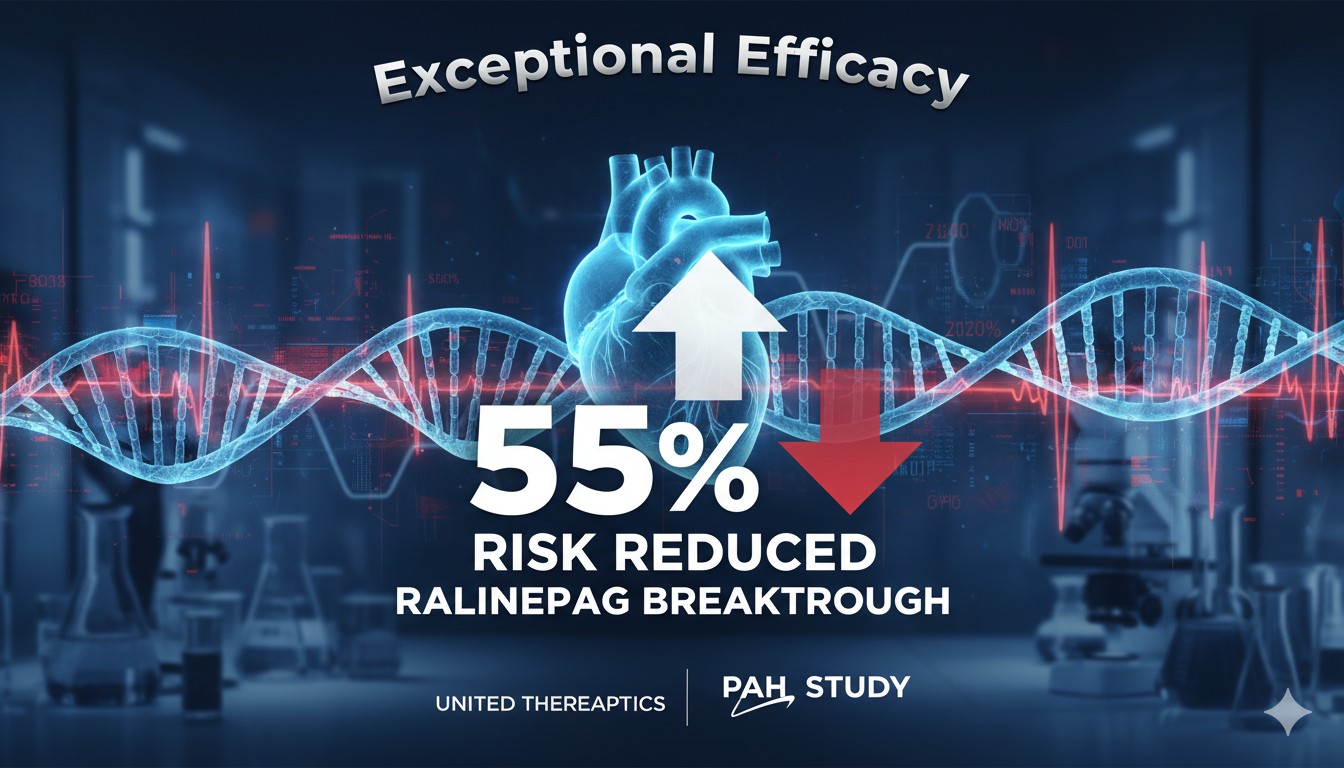
“In a groundbreaking phase 3 ADVANCE OUTCOMES study, United Therapeutics’ investigational oral prostacyclin agonist ralinepag achieved a highly significant 55% reduction in the risk of clinical worsening events compared to placebo in patients with pulmonary arterial hypertension, alongside notable improvements in exercise capacity, biomarker levels, and overall clinical improvement odds, marking a potential major step forward in managing this progressive and life-threatening rare lung disease.”
Ralinepag Shows Exceptional Efficacy in Delaying PAH Progression
The long-term pivotal phase 3 ADVANCE OUTCOMES trial has delivered compelling evidence of ralinepag’s potential to transform treatment approaches for pulmonary arterial hypertension (PAH), a rare, progressive disorder characterized by elevated blood pressure in the pulmonary arteries that strains the right side of the heart and limits blood flow to the lungs. This event-driven study enrolled 687 patients with WHO Group 1 PAH, predominantly those already receiving standard background therapies, reflecting a real-world, challenging patient population.
Ralinepag, administered as a once-daily oral extended-release formulation, met its primary endpoint with exceptional statistical significance. Treatment with ralinepag reduced the risk of a first adjudicated clinical worsening event by 55% relative to placebo, corresponding to a hazard ratio of 0.45 (95% confidence interval: 0.33–0.62; p<0.0001). This robust outcome underscores the drug's ability to meaningfully delay disease progression in patients who face ongoing risks despite existing treatments.
Clinical worsening events in the trial were rigorously defined and adjudicated, including:
All-cause death
Non-elective hospitalization due to worsening PAH
Disease progression (as defined per protocol)
Initiation of parenteral or inhaled prostacyclin therapy for worsening PAH
Unsatisfactory long-term clinical response
In the placebo arm, 35.9% of patients experienced at least one such event as their first occurrence, compared to only 18.3% in the ralinepag group. Breakdown of first events highlighted consistent benefits across categories, with particularly notable reductions in disease progression and unsatisfactory long-term response.
The study population was heavily pre-treated, with 80% of participants on dual background PAH therapy at baseline—a testament to the trial’s relevance to current clinical practice where combination regimens are standard. Additionally, 70% of enrolled patients were classified as WHO/NYHA Functional Class II, indicating milder symptomatic impairment but still at substantial risk of deterioration.
Beyond the primary endpoint, ralinepag demonstrated statistically significant and clinically meaningful benefits on several key secondary measures. Improvements were observed in six-minute walk distance (6MWD), a widely used functional assessment that correlates with survival and quality of life in PAH. Ralinepag also produced favorable changes in N-terminal pro-B-type natriuretic peptide (NT-proBNP), a biomarker that reflects right ventricular strain and prognostic importance in PAH.
Furthermore, ralinepag increased the odds of achieving clinical improvement from baseline to Week 28 by 47% compared to placebo (p=0.015). This composite measure of improvement likely incorporated elements such as enhanced functional class, better exercise tolerance, and biomarker response, providing a holistic view of patient benefit.
Safety data from the trial indicated that ralinepag was generally well tolerated. The adverse event profile aligned with known effects of prostacyclin pathway agents, including typical symptoms such as headache, flushing, jaw pain, diarrhea, and nausea. No new or unexpected safety signals emerged during the study, supporting the drug’s viability for long-term use in a chronic condition like PAH.
The extended-release design of ralinepag aims to provide steady-state exposure that more closely mimics the pharmacokinetics of continuous parenteral prostacyclin infusions, potentially offering the disease-modifying benefits of potent prostacyclin signaling without the burdens of intravenous or subcutaneous delivery systems. This oral convenience could represent a meaningful advance for patients who currently rely on more invasive therapies when disease advances.
With these positive results from ADVANCE OUTCOMES, United Therapeutics plans to pursue regulatory submissions for ralinepag in PAH during 2026, potentially expanding the therapeutic arsenal against this devastating condition. The trial’s success in a predominantly pre-treated cohort highlights ralinepag’s additive value when layered onto existing regimens, addressing an ongoing need for therapies that further mitigate progression and improve outcomes.
The full data set from ADVANCE OUTCOMES is expected to be presented at an upcoming major international medical conference, offering deeper insights into subgroups, durability of effect, and additional exploratory analyses.
Disclaimer: This article is for informational purposes only and does not constitute medical advice, investment recommendation, or endorsement of any product. PAH management should always be guided by qualified healthcare professionals based on individual patient circumstances.