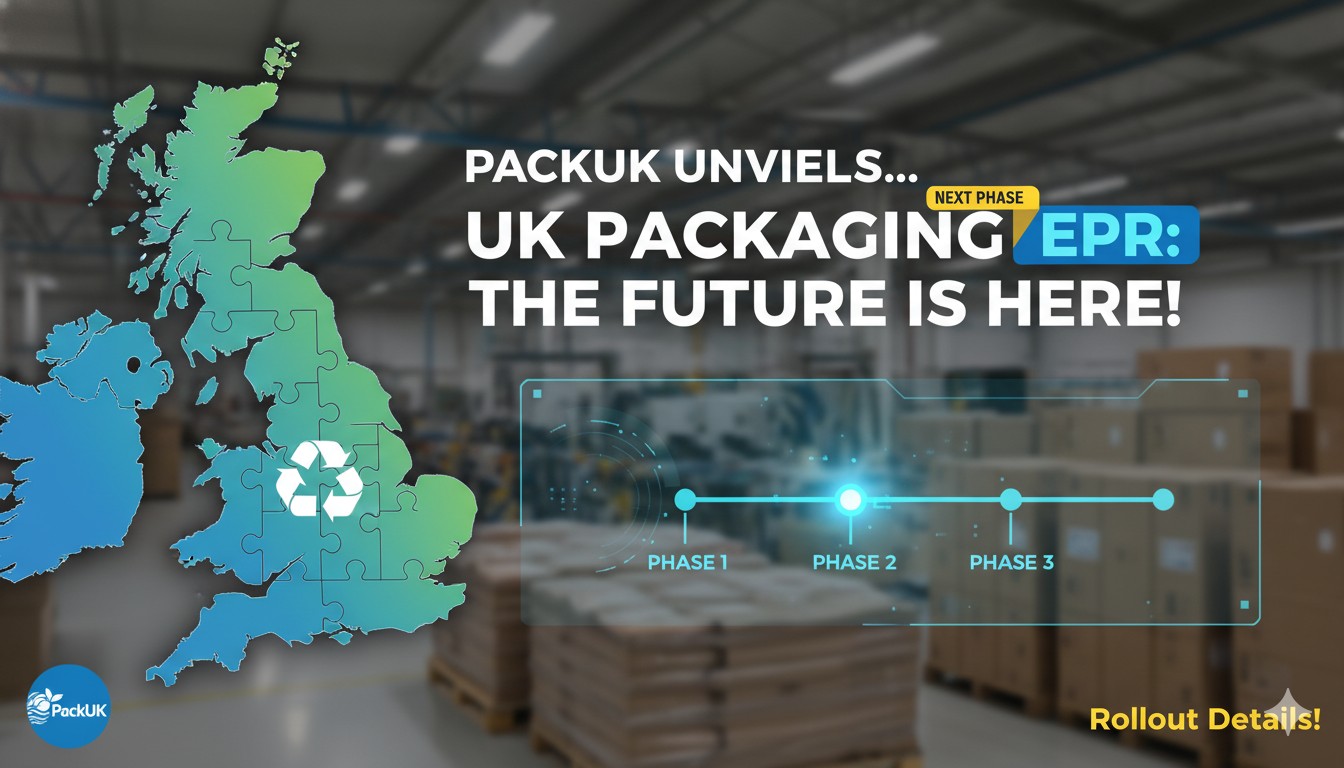
PackUK has outlined its operational plan for the 2026-2027 financial year, marking the second phase of the UK’s Extended Producer Responsibility (EPR) scheme for packaging. The plan projects approximately £1.56 billion in producer fees to support local authority waste management, introduces eco-modulated disposal fees based on recyclability, advances the appointment of a Producer Responsibility Organisation (PRO), and addresses lessons from the first year, including a government-backed funding gap closure for Year 1 stability. Modulation begins this year, incentivizing sustainable packaging choices while the scheme aims to enhance recycling infrastructure and reduce taxpayer burden.
PackUK’s Operational Blueprint for 2026-2027
PackUK, the designated scheme administrator for the UK’s Extended Producer Responsibility (EPR) for packaging—operating across England, Scotland, Wales, and Northern Ireland—has released its detailed operational plan for the 2026 to 2027 period. This document builds directly on the scheme’s foundational year (2025-2026), where producers began paying disposal cost fees for household packaging waste, shifting financial responsibility from local taxpayers to those who place packaging on the market.
The 2026-2027 assessment year represents a critical escalation in implementation. PackUK forecasts total producer payments around £1.56 billion, earmarked primarily for reimbursing local authorities for the full net costs of collecting, sorting, and managing household packaging waste. This figure reflects updated data submissions, refined cost modeling, and adjustments for operational realities encountered in the inaugural phase.
A cornerstone of this next phase is the introduction of modulated disposal fees . Unlike the flat base fees applied in Year 1—such as £423 per tonne for plastics and £192 per tonne for glass—the 2026-2027 fees incorporate eco-modulation. This system uses a Recyclability Assessment Methodology (RAM) to assign red-amber-green (RAG) ratings to packaging types. Lower fees apply to highly recyclable (green-rated) materials, while harder-to-recycle (red-rated) formats face higher charges. The modulation policy, first outlined in mid-2025, aims to drive producers toward more sustainable designs, such as easily separable multi-material packaging or increased use of recyclable mono-materials. PackUK has committed to ongoing evidence gathering and annual refinements to ensure the system effectively incentivizes environmental improvements.
Key priorities for the operational year include:
Delivering agreed outcomes from the joint UK EPR policy statement, ensuring consistent application across the four nations.
Appointing an independent, producer-led Producer Responsibility Organisation (PRO) to collaborate with PackUK on scheme delivery. The PRO will support producers in meeting obligations, potentially handling aspects like compliance support, data validation, and future waste management coordination.
Implementing enhanced data reporting and validation processes, informed by Year 1 experiences where a high volume of appeals against initial invoices led to potential reissuances and funding shortfalls.
Distributing funds efficiently to local authorities, with payments structured quarterly to align with waste collection cycles.
Advancing the Recyclability Assessment Methodology roadmap through 2030, including clarity on definitions, labeling considerations, and alignment reviews.
From the first assessment year (2025-2026), PackUK issued initial notices of liability and anticipated £1.44 billion in local authority payments, supplemented by administration costs and a small impairment provision. However, challenges emerged, including higher-than-expected appeals and data discrepancies. To maintain scheme integrity and avoid immediate producer burden spikes, the UK government intervened with a one-time funding closure for the Year 1 gap, ensuring local authorities received promised reimbursements without immediate fee hikes.
For 2026-2027, PackUK emphasizes operational stability. The plan includes refined timelines for data submission—large producers reporting half-yearly and small producers annually—alongside reduced resubmission windows to streamline processing. Indicative fee increases for certain materials have been signaled, reflecting updated cost estimates and modulation impacts.
Illustrative Year 2 Disposal Fees (Base Adjustments and Modulation Implications)
While final modulated fees depend on 2025 packaging data and RAM applications, PackUK’s illustrative projections highlight directional changes:
Plastics: Base movement from £423/tonne (Year 1) toward £455/tonne or adjusted equivalents, with significant variation based on RAG ratings.
Paper and board, aluminum, steel, and glass: Similar base adjustments, modulated downward for recyclable formats and upward for non-compliant ones.
Overall scheme: Emphasis on incentivizing shifts away from difficult-to-process packaging, potentially reducing long-term system costs through higher recycling rates.
Producers face renewed obligations to assess packaging against evolving RAM criteria, with PackUK’s roadmap providing clarity on annual updates, including a expected RAM 2027 release in July 2026. This phase also ties into broader circular economy goals, supporting investments in recycling infrastructure and aligning with parallel initiatives like potential mandatory labeling and Deposit Return Scheme preparations.
The operational plan underscores PackUK’s commitment to transparency, performance measurement, and collaboration with producers, local authorities, and regulators. By prioritizing modulation and PRO integration, the scheme administrator positions the EPR framework to deliver tangible environmental benefits, including reduced waste, increased material recovery, and a more accountable packaging supply chain.
Disclaimer: This article is for informational purposes only and does not constitute financial, legal, or compliance advice. Businesses should consult official PackUK and government guidance for specific obligations under the Producer Responsibility Obligations (Packaging and Packaging Waste) Regulations.