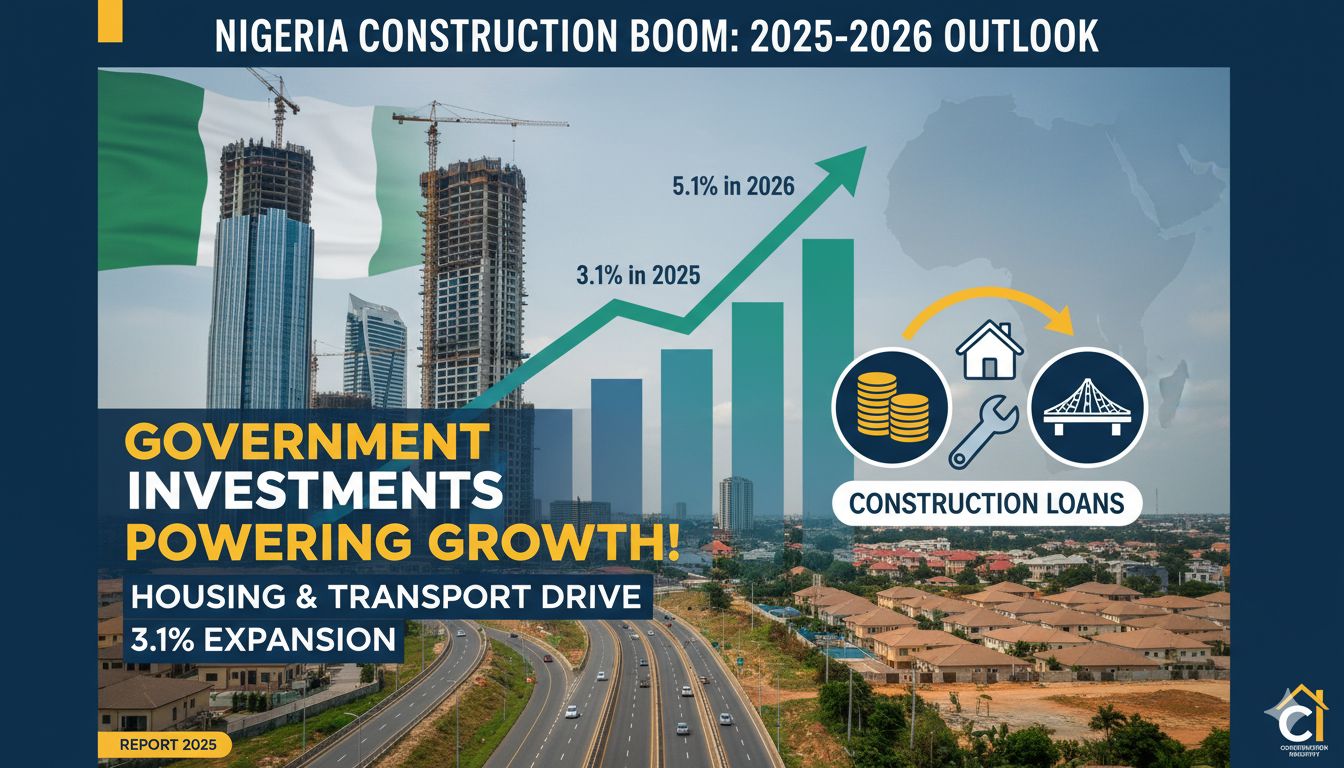
**> Nigeria’s construction industry is set to grow by 5.3% in real terms in 2025, moderating to 3.1% in 2026, fueled primarily by substantial government spending on housing and transport infrastructure alongside a surge in dedicated construction loans that enhance project execution and private-sector participation. **
Nigeria Construction Industry Report 2025: Output to Grow by 3.1% in 2026 After 5.3% in 2025, Driven by Government Investments in Housing and Transport, Coupled Construction Loans
The Nigerian construction landscape continues to evolve as a critical engine of economic activity, contributing significantly to GDP through direct output and multiplier effects on employment, materials supply chains, and related services. After navigating challenges including inflationary pressures, material cost volatility, and funding gaps in prior years, the sector has demonstrated resilience. Real growth accelerated to 5.3% in 2025, outperforming earlier conservative estimates in some analyses, thanks to accelerated disbursement of public funds and improved access to credit.
Looking ahead to 2026, the anticipated 3.1% real-term expansion signals a stabilization phase rather than deceleration. This moderation stems from the natural progression of major projects entering completion stages, alongside broader macroeconomic factors such as controlled inflation and steady non-oil sector performance. Nonetheless, the underlying fundamentals remain supportive, with public investment remaining the dominant catalyst.
Key Drivers of Growth
Government expenditure on infrastructure stands out as the primary force propelling the sector. Federal and state budgets have prioritized capital projects aimed at closing Nigeria’s vast infrastructure gap, estimated in the trillions of dollars over decades. In transport, allocations support ongoing road rehabilitation, new highway corridors, rail extensions, and airport modernizations. These initiatives aim to improve connectivity between economic hubs, reduce logistics costs, and facilitate trade under regional frameworks.
Housing emerges as another pillar, with ambitious targets to deliver affordable units amid rapid urbanization and a population surge pushing demand far beyond current supply. Programs under the Renewed Hope Agenda and similar state-level schemes focus on mass housing estates, urban renewal, and slum upgrades. Public-private partnerships (PPPs) play an increasingly vital role, attracting private capital to supplement government resources while accelerating delivery.
The rise in construction loans has provided essential working capital. Banking sector exposure to the industry has expanded, with credit growth reflecting eased monetary conditions and targeted interventions to boost real-economy lending. This financing supports contractors in mobilizing equipment, procuring materials, and managing cash flow on large-scale sites.
Sectoral Breakdown and Performance
The construction industry segments reflect varied dynamics:
Infrastructure : Dominates growth, driven by transport and energy-related builds. Major road networks, bridges, and rail projects continue to absorb significant budgets. Power-related civil works, including grid expansions and renewable integration support, add momentum.
Residential : Experiences robust activity from government-backed affordable housing drives. Urban centers like Lagos, Abuja, and Port Harcourt see high-volume developments, though private luxury segments face affordability headwinds.
Commercial : Benefits indirectly from infrastructure improvements that enhance business environments. Office developments, retail complexes, and hospitality projects in growing cities maintain steady progress.
Industrial : Tied to manufacturing revival and resource extraction. Facilities linked to oil and gas, agro-processing zones, and mining infrastructure contribute meaningfully.
Institutional : Includes schools, hospitals, and public buildings, supported by dedicated allocations in education and health sectors.
Average annual growth from 2027 onward is expected to hover around 3.1%, aligning with sustained but measured public investment and gradual private-sector scaling.
Challenges and Mitigating Factors
Persistent issues include supply-chain disruptions for imported materials, skilled labor shortages, and project delays from bureaucratic hurdles. However, recent reforms—such as streamlined PPP approvals, standardized contracts, and insurance mandates—aim to enhance efficiency and reduce risks.
Digital adoption, though still emerging, shows promise in project management and monitoring. Modular construction techniques and prefabrication gain traction to address time and cost pressures.
Outlook and Strategic Implications
The sector’s trajectory underscores Nigeria’s commitment to infrastructure-led growth. Sustained government focus on housing and transport, combined with improving financing conditions, positions the industry for consistent contributions to national development. Stakeholders anticipate that continued policy execution, coupled with private investment inflows, will support long-term expansion and help bridge critical deficits in built environment assets.
Disclaimer: This is general news and analysis based on industry trends and forecasts; it does not constitute financial, investment, or professional advice.