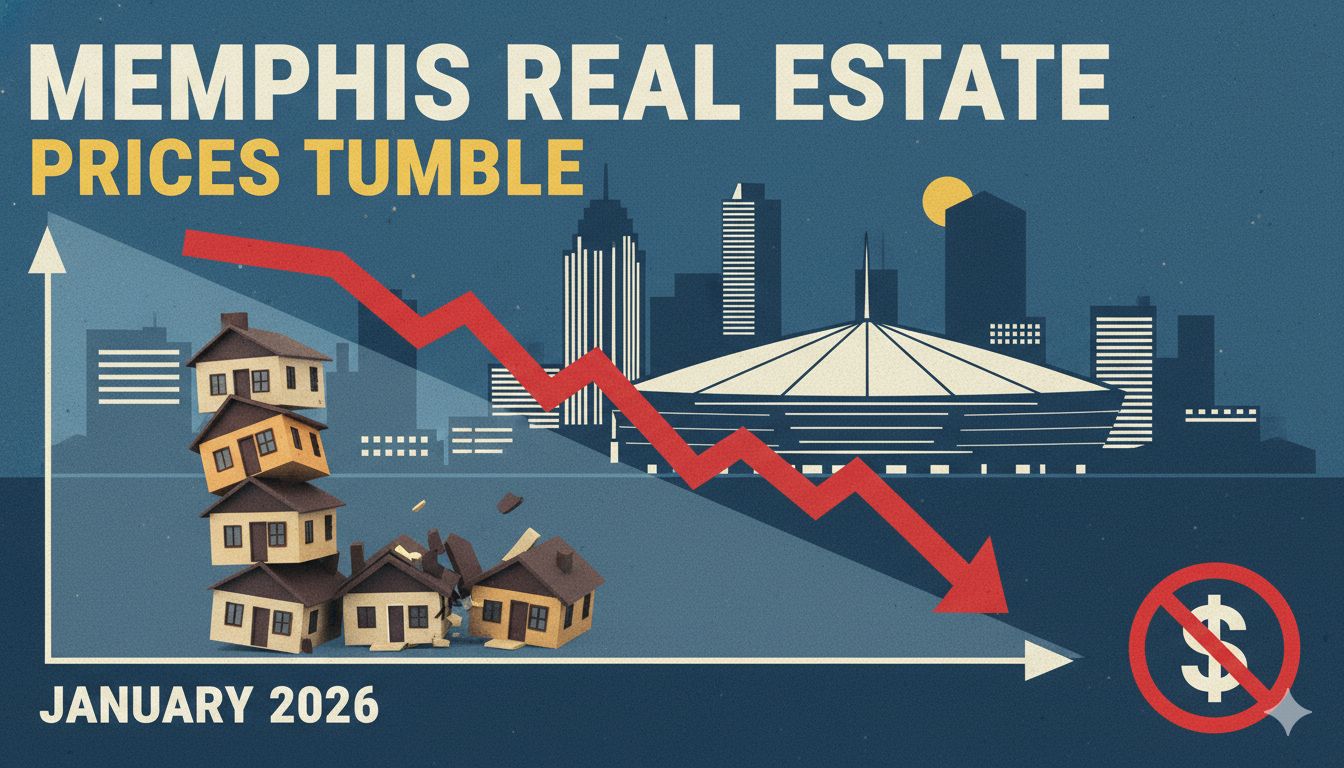
“In January 2026, Memphis home prices continued to face downward pressure, with median sale prices dipping modestly year-over-year according to multiple tracking sources, while Zillow reports a 2.8% decline in average home values over the past year to around $141,500. Redfin data shows a median sale price of approximately $179,000, down 0.83% from the prior year, and Realtor.com highlights a notable -5.8% drop in price per square foot for the metro area, placing Memphis among metros with larger declines. Sales volumes fell sharply in some reports, with inventory levels varying but contributing to longer market times in certain datasets.”
Real Estate Market Trends in Memphis, TN: Prices Fall – January 2026
The Memphis housing market entered 2026 with clear indications of cooling momentum, particularly evident in January data reflecting price softening across key indicators. This trend aligns with national patterns where some Southern and Midwestern metros experienced moderated growth or outright declines amid persistent affordability challenges, elevated mortgage rates in recent periods, and inventory adjustments.
January’s median sale price in the city proper hovered around $179,000 according to comprehensive tracking, marking a slight year-over-year decrease of about 0.83%. This figure represents a pullback from prior peaks, though it remains notably affordable compared to national averages. Price per square foot also trended lower, dropping significantly in some metro-wide measures to reflect adjustments in valuation for property sizes.
Zillow’s aggregated home value index for Memphis stood at approximately $141,489, reflecting a more pronounced 2.8% decline over the trailing 12 months. This metric, which captures estimated values across a broad sample of properties, underscores broader softening in perceived worth, particularly in entry-level and mid-tier segments that dominate the local inventory.
Local MLS insights from the Memphis Area Association of REALTORS presented a somewhat contrasting picture on median sales price, showing an uptick to $200,000 for the broader area—a 5.3% increase from January of the previous year. However, average sales prices in the same data dipped 5.5% to roughly $236,238, highlighting variability depending on property types, locations, and the impact of higher-end sales skewing averages downward when volumes shift.
Sales activity faced headwinds, with reports indicating a substantial drop in closed transactions. One dataset noted 293 homes sold in the city, down 16% from the prior year, while broader area figures showed even steeper declines of over 34% in total sales compared to January last year. This slowdown contributed to extended days on market in several sources, averaging around 52 days in some reports (slightly improved from 56 days previously) but stretching longer in others up to 71 days or more.
Inventory dynamics played a key role in these shifts. While some sources reported modest increases in active listings, others noted constraints persisting in certain price bands, creating pockets of competition. New listings surged dramatically in select reports, up over 300% year-over-year in one analysis, suggesting sellers were testing the waters more aggressively amid cooling buyer enthusiasm.
Neighborhood-level variations added nuance to the citywide picture. Higher-end or more desirable areas like East Memphis saw robust gains, with median prices climbing over 22% to around $355,000. In contrast, more affordable zones such as South Memphis remained in lower price tiers around $65,000 with modest upticks, while North Memphis posted significant percentage jumps but from lower bases.
Broader metro data from Realtor.com positioned the Memphis area among those with notable price per square foot declines of 5.8% year-over-year, alongside a median list price environment around $299,900 in some aggregations. This contributed to the region’s ranking lower in national market forecasts for 2026, with expectations of subdued sales growth and limited price appreciation.
Several factors underpin these trends. Affordability pressures continue to weigh on demand, as wage growth has not fully kept pace with prior price gains in many segments. Interest rate environments, though potentially easing in forecasts, have kept monthly payments elevated for many prospective buyers. Seasonal influences, including reported weather disruptions like ice storms, likely suppressed activity in the opening month of the year.
Despite the price falls observed in January, the market retains fundamental strengths. Memphis remains one of the more accessible major metro housing markets in the U.S., with median figures well below national benchmarks, appealing to first-time buyers, investors, and relocators drawn to job opportunities in logistics, healthcare, and distribution sectors.
Looking ahead in 2026, analysts anticipate a stabilization phase rather than sharp reversals, with some projections pointing to modest overall growth in home values if demand rebounds and inventory normalizes further. Buyers may find enhanced negotiating leverage in the current environment, particularly for properties lingering longer on the market, while sellers in premium neighborhoods could still command strong interest.
Disclaimer: This is for informational purposes only and does not constitute financial, investment, or real estate advice. Market conditions can change rapidly based on economic factors, local events, and individual circumstances. Consult qualified professionals for personalized guidance.