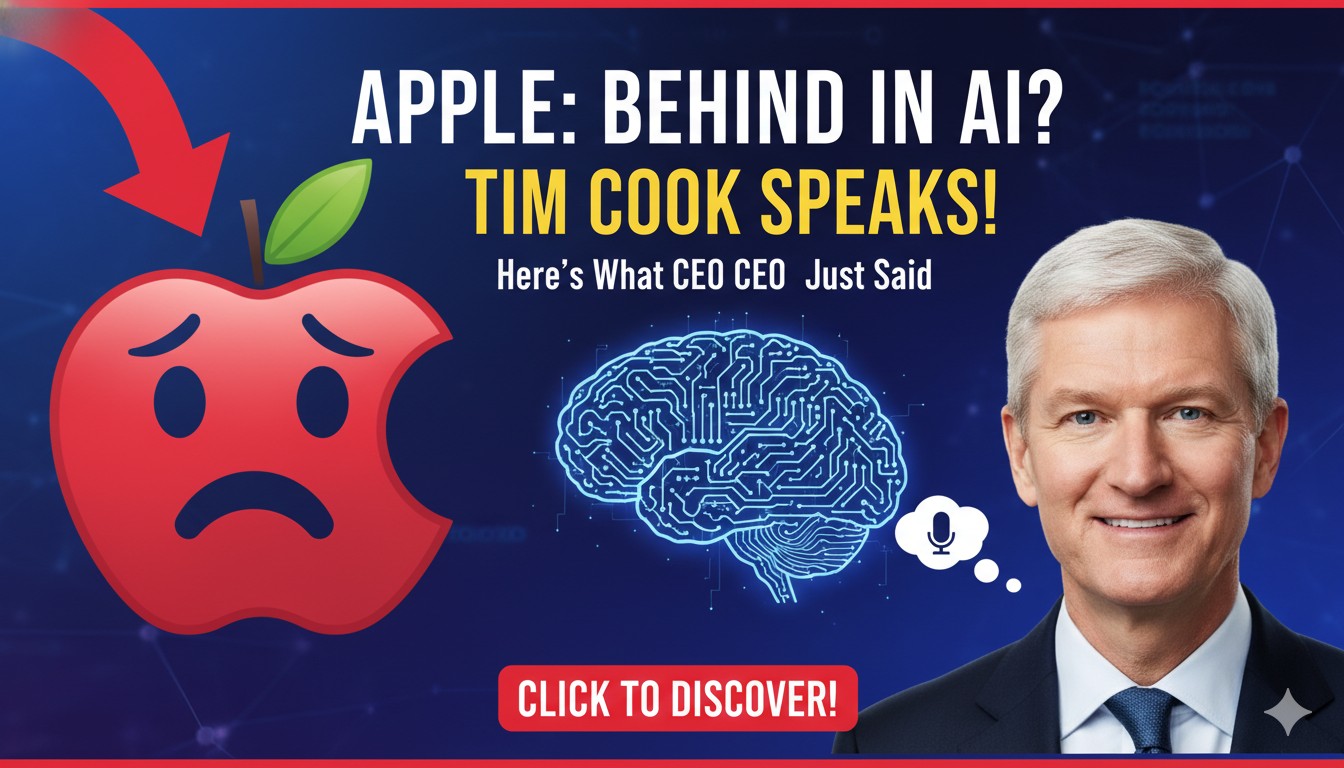
“Amid speculation that Apple is trailing rivals in the AI boom, CEO Tim Cook counters with confidence in the company’s privacy-centric approach, teasing new AI-driven product categories, highlighting robust user adoption of Apple Intelligence features, and pointing to partnerships that bolster its foundation models, all while the firm posts record-breaking quarterly results fueled by surging iPhone demand.”
Apple’s Position in the AI Landscape
Concerns have mounted that Apple may be losing ground to competitors aggressively investing in generative AI technologies. Rivals have rolled out advanced large language models, AI-infused hardware, and chatbot integrations at a rapid pace, raising questions about whether Apple’s more measured rollout risks obsolescence. Critics point to delays in overhauling core features like Siri and a perceived reliance on external collaborations rather than in-house dominance in foundational AI development.
Yet, Apple’s leadership views this not as a setback but as a strategic advantage rooted in its ecosystem strengths. The company has embedded AI across its devices, emphasizing seamless integration that prioritizes user privacy over flashy, data-hungry applications. This approach, executives argue, positions Apple to deliver AI experiences that are both innovative and trustworthy, avoiding the pitfalls of privacy scandals that have plagued some peers.
Tim Cook’s Recent Statements on AI
In a series of internal communications and public disclosures, CEO Tim Cook has directly addressed these criticisms. He emphasized that Apple is not merely catching up but is poised to lead in meaningful AI applications. Cook highlighted the company’s belief that no other firm is better equipped to enable profound AI use for consumers, citing Apple’s hardware-software synergy as a key differentiator.
Cook pointed to upcoming advancements, including entirely new categories of products and services powered by AI. These could encompass smart home hubs, enhanced wearables, or novel interfaces that leverage voice and visual recognition in unprecedented ways. He expressed excitement about the opportunities AI unlocks, suggesting that Apple’s innovations will introduce capabilities “never seen before” in the market.
On the monetization front, Cook described AI integration as a natural extension of Apple’s business model, woven into the operating system for personal, private use. Rather than pursuing ad-driven or subscription-heavy tactics common among competitors, Apple focuses on enhancing device value, which in turn drives hardware upgrades and service revenues. This strategy, he noted, aligns with the company’s core values, turning privacy into a competitive edge rather than a constraint.
Adoption and User Engagement with Apple Intelligence
Apple’s AI suite, known as Apple Intelligence, has seen significant uptake since its phased rollout. Cook revealed that a majority of eligible iPhone users are actively engaging with these tools, underscoring their practical appeal in daily life. Among the standout features is Visual Intelligence, which allows users to analyze screen content, identify objects, translate text, and extract insights from images in real-time.
Other popular elements include enhanced writing assistance for emails and notes, smarter photo editing that removes distractions or enhances details automatically, and priority notifications that filter out noise based on context. These features are designed to feel intuitive rather than revolutionary, building on existing habits to boost productivity without overwhelming users.
To illustrate the breadth of adoption, consider the following breakdown of key Apple Intelligence capabilities and their reported user benefits:
| Feature | Description | User Impact |
|---|---|---|
| Visual Intelligence | Real-time analysis of images and screen content for identification, translation, and actionable insights. | Speeds up searches and tasks, with high engagement in travel, shopping, and learning scenarios. |
| Writing Tools | AI-assisted composition, proofreading, and summarization across apps. | Improves communication efficiency, particularly for professionals and students. |
| Image Playground | Generative tools for creating and editing visuals. | Enhances creativity in personal and work projects, with strong appeal in social media and design. |
| Notification Prioritization | Contextual filtering to highlight important alerts. | Reduces distraction, leading to better focus and time management. |
| Audio Transcription | Automatic conversion of voice memos and calls to text. | Aids accessibility and productivity for note-taking and archiving. |
This table reflects how Apple Intelligence is embedding AI into routine interactions, contributing to higher device satisfaction and loyalty.
Partnerships and Technological Foundations
To accelerate its AI ambitions, Apple has forged key alliances, including a multi-year deal to incorporate advanced models into its ecosystem. This collaboration enables rapid scaling of capabilities like chatbot functionalities and on-device processing, ensuring performance without compromising security.
Cook has stressed that these partnerships are complementary, allowing Apple to focus on what it does best: hardware optimization and user-centric design. For instance, upcoming updates to Siri aim to transform it from a basic assistant into a sophisticated, context-aware agent capable of handling complex, multi-step queries. This revamp, expected in future OS versions, will run on a mix of on-device and cloud infrastructure, balancing speed with privacy.
Comparisons with competitors reveal Apple’s deliberate pace. While others pour billions into data centers for training massive models, Apple invests in efficient, edge-based AI that minimizes latency and energy use. This could prove advantageous as regulatory scrutiny on data practices intensifies, potentially hampering data-intensive rivals.
Financial Implications and Market Response
Apple’s AI narrative is intertwined with its financial health, as evidenced by its fiscal first-quarter results. The company achieved record revenue, driven by a substantial uptick in iPhone sales, which surged due to demand for AI-enabled models. Services revenue also climbed, bolstered by app ecosystem enhancements that incorporate AI for better personalization.
Stock performance has mirrored this optimism, with shares rising significantly post-earnings. Investors appear reassured by Cook’s vision, viewing AI as a long-term growth driver rather than an immediate revenue spike. Key financial metrics from the quarter include:
Revenue: Exceeded expectations, with hardware contributing the lion’s share.
Gross Margin: Maintained at healthy levels despite increased AI R&D spending.
Operating Expenses: Rose due to AI investments, but offset by efficiencies in supply chain.
To contextualize Apple’s AI spending relative to peers:
| Company | Annual AI Investment (Estimated in Billions) | Focus Areas |
|---|---|---|
| Apple | 5-7 | Device integration, privacy-focused models, ecosystem enhancements. |
| Microsoft | 10-15 | Cloud infrastructure, enterprise tools, partnerships with model developers. |
| Alphabet (Google) | 12-18 | Search optimization, hardware like Pixel devices, foundational research. |
| Amazon | 8-12 | E-commerce personalization, logistics AI, cloud services. |
| Meta | 9-14 | Social media algorithms, metaverse applications, open-source models. |
Apple’s outlay, while substantial, emphasizes quality over quantity, aligning with its premium brand positioning.
Competitive Challenges and Future Outlook
Despite Cook’s assurances, challenges persist. Siri has faced criticism for lagging in conversational depth compared to alternatives, prompting the need for foundational overhauls. Additionally, Apple’s closed ecosystem may limit third-party AI integrations, potentially stifling innovation from external developers.
However, strengths in chip design, such as the M-series processors optimized for neural tasks, provide a solid base. Future devices could feature AI-first architectures, where hardware is built around intelligent agents rather than traditional apps. This shift might redefine user interfaces, prioritizing voice and predictive actions.
Cook’s comments also touch on broader implications, such as AI’s role in emerging markets like smart homes and automotive integrations. Apple’s CarPlay, for example, is evolving to support advanced voice assistants, hinting at expansions beyond consumer electronics.
Key Points from Cook’s Vision
Privacy as Differentiator : Apple integrates AI in ways that protect user data, contrasting with competitors’ approaches.
New Product Horizons : Excitement around AI-enabled categories signals potential disruptions in wearables, home tech, and beyond.
User-Centric Innovation : Focus on practical, everyday enhancements rather than hype-driven features.
Strategic Investments : Growing R&D in AI, with partnerships accelerating deployment.
Confidence in Leadership : Apple positioned uniquely to deliver meaningful AI experiences.
These elements form the crux of Apple’s rebuttal to doubts about its AI prowess, painting a picture of steady, purposeful progress.
Disclaimer: This news report offers general information and insights based on various sources. It does not constitute financial advice, investment recommendations, or professional tips.