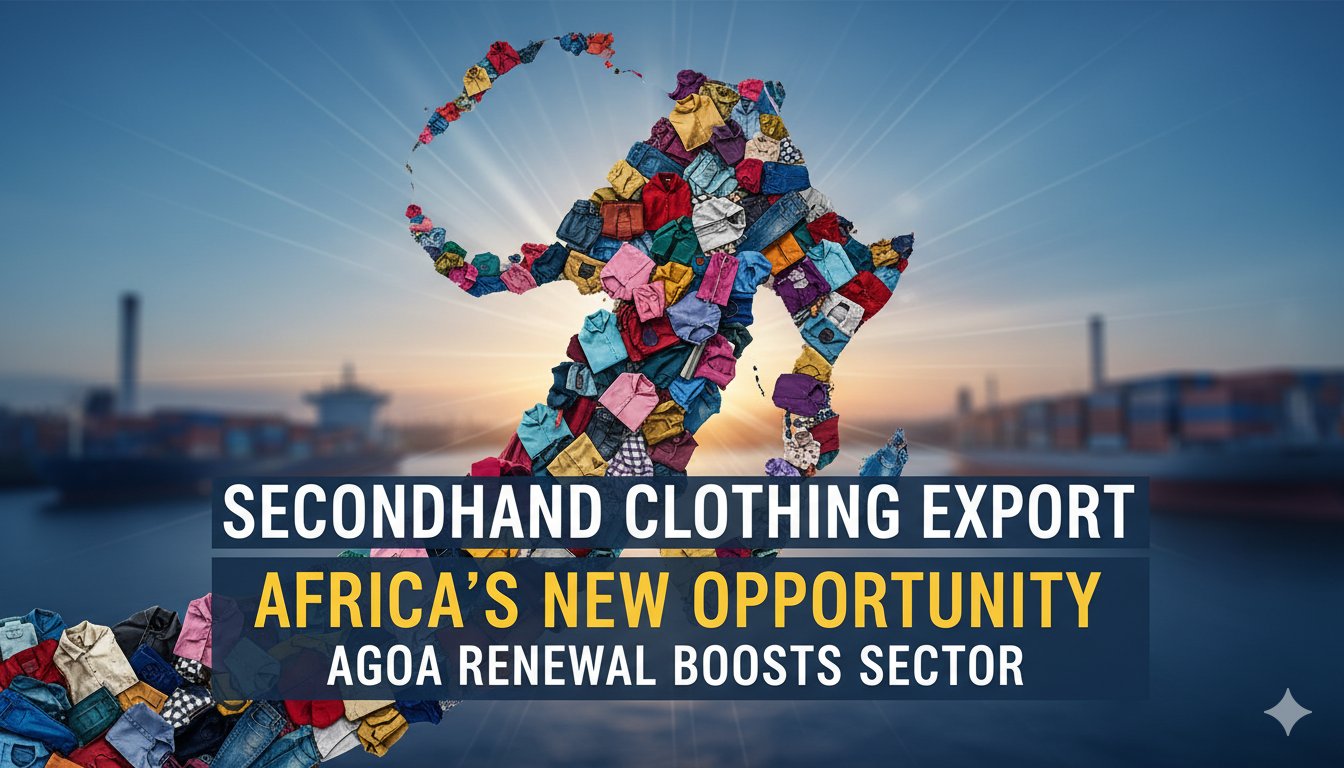
“The recent extension of the African Growth and Opportunity Act (AGOA) to the end of 2026 provides a vital lifeline to U.S. exporters of secondhand clothing, ensuring continued access to key African markets amid global trade uncertainties. This move supports the recycled textiles industry by maintaining open trade channels, bolstering export volumes valued at nearly $1 billion annually, and preserving thousands of jobs in sorting, processing, and shipping operations across the United States. It also aligns with sustainability goals by promoting textile reuse, reducing waste, and fostering economic ties with sub-Saharan African nations.”
The AGOA Extension and Its Framework
The African Growth and Opportunity Act stands as a cornerstone of U.S.-Africa trade relations, granting duty-free access for eligible sub-Saharan African countries to export a wide array of goods to the American market. This preferential treatment covers over 6,500 product lines, ranging from apparel and textiles to agricultural commodities and manufactured items. The program’s eligibility criteria emphasize good governance, human rights, and market-oriented economic policies in participating nations, creating a mutually beneficial environment that encourages investment and trade flows in both directions.
With the latest legislative action, AGOA has been extended on a short-term basis, providing stability through the end of next year. This adjustment addresses immediate concerns over potential disruptions that could arise from lapsed preferences, allowing exporters and importers to plan operations without the overhang of sudden tariff impositions. For U.S. businesses, this continuity is particularly critical in sectors where African markets represent a significant share of demand, such as recycled textiles. The extension also includes provisions for ongoing reviews of eligibility, ensuring that participating countries adhere to standards that prevent unfair trade barriers.
Link Between AGOA and U.S. Secondhand Clothing Exports
The secondhand clothing sector in the United States thrives on exporting used garments, shoes, and textiles to international markets, with sub-Saharan Africa emerging as one of the largest recipients. These exports not only divert millions of tons of textiles from landfills but also supply affordable apparel to consumers in developing economies. AGOA plays an indirect yet pivotal role in this dynamic by linking U.S. trade preferences to open-market policies in Africa. Historically, attempts by some African governments to impose restrictions or bans on imported used clothing—to protect local manufacturing—have been met with diplomatic pressures tied to AGOA eligibility, effectively keeping these markets accessible for American exporters.
Organizations representing the recycled textiles industry have long advocated for AGOA’s renewal, highlighting its importance in sustaining export channels. Without such frameworks, tariffs or quotas could erode the competitiveness of U.S. shipments, leading to reduced volumes and higher costs. The program’s structure incentivizes African nations to maintain liberal import regimes, which in turn supports the flow of secondhand goods. This symbiotic relationship has helped the U.S. maintain a dominant position in the global reused clothing trade, where American-sourced items are prized for their quality and variety.
Economic Scale of the Secondhand Clothing Export Industry
The U.S. secondhand clothing export sector generates substantial economic activity, employing tens of thousands in collection, sorting, baling, and logistics operations. Major hubs include cities like Houston, New York, and Los Angeles, where warehouses process donated and surplus apparel for overseas shipment. Annual export values to Africa alone approach $1 billion, encompassing a broad category of used merchandise that includes clothing, household textiles, and accessories. This trade supports downstream industries in recipient countries, where imported bales are unpacked, sorted, and resold through vibrant informal markets, creating jobs in retail and tailoring.
To illustrate the sector’s footprint, consider the following trade data compiled from industry reports:
| Year | U.S. Used Clothing Exports to Africa (Value in USD Millions) | Key Destinations | Growth Rate (%) |
|---|---|---|---|
| 2021 | 850 | Kenya, Ghana, Tanzania | 5.2 |
| 2022 | 920 | Kenya, Uganda, Nigeria | 8.2 |
| 2023 | 993 | Ghana, Kenya, Rwanda | 7.9 |
| 2024 | 1,050 (estimated) | Tanzania, Ethiopia, South Africa | 5.7 |
| 2025 | 1,120 (projected) | Kenya, Ghana, Uganda | 6.7 |
These figures underscore a consistent upward trajectory, driven by rising demand in Africa fueled by population growth and urbanization. The projections for 2025 account for increased global awareness of sustainable fashion, which amplifies the appeal of reused items. However, without AGOA’s stabilizing influence, these numbers could face downward pressure from potential retaliatory measures or shifts in African trade policies.
Key Players and Industry Advocacy
Prominent stakeholders in the secondhand clothing export arena include trade associations that lobby for favorable policies. These groups emphasize the environmental benefits of textile recycling, noting that exporting used clothing extends the lifecycle of garments and reduces the carbon footprint associated with new production. They argue that AGOA’s renewal not only safeguards jobs but also aligns with U.S. goals for circular economies, where waste minimization is prioritized.
Exporters operate through a network of collectors, including charities, thrift stores, and commercial recyclers, who gather surplus from consumers and retailers. Once sorted, items are compressed into bales weighing up to 1,000 pounds and shipped via container vessels to ports like Mombasa in Kenya or Tema in Ghana. From there, distribution networks fan out to wholesale and retail outlets, injecting value into local economies. Challenges such as fluctuating shipping costs and currency volatility are mitigated by the predictability offered by trade agreements like AGOA, which discourages abrupt policy changes in partner countries.
Sustainability and Market Dynamics
The boost from AGOA’s extension resonates strongly with sustainability trends in the global apparel industry. Secondhand exports contribute to reducing the 92 million tons of textile waste generated annually worldwide, with the U.S. accounting for a significant portion. By channeling these materials to Africa, exporters help meet demand for affordable clothing while promoting reuse over disposal. This aligns with consumer shifts toward eco-friendly practices, where thrifting and upcycling gain traction.
Market dynamics in Africa reveal a dual-edged impact: while imported used clothing provides low-cost options for millions, it occasionally sparks debates over competition with domestic textile producers. AGOA’s framework encourages balanced approaches, such as investments in local manufacturing that complement rather than conflict with imports. For U.S. exporters, this means opportunities to partner on initiatives like skills training or supply chain integration, further embedding their role in the continent’s economic fabric.
Future Implications for Trade and Investment
Looking ahead, the short-term AGOA extension opens the door for negotiations on a longer-term reauthorization, potentially incorporating enhancements like expanded product coverage or digital trade provisions. For the secondhand sector, this could translate to streamlined customs procedures and reduced non-tariff barriers, facilitating smoother exports. Analysts project that sustained access could push U.S. used clothing shipments to Africa beyond $1.5 billion by the end of the decade, assuming stable geopolitical conditions.
Investment flows are also poised to increase, with U.S. firms exploring joint ventures in African recycling facilities. Such collaborations could diversify export portfolios, including higher-value sorted goods like premium denim or athletic wear. The extension mitigates risks from global supply chain disruptions, positioning the sector for resilient growth amid uncertainties in other trade arenas.
Sector-Specific Challenges and Opportunities
Despite the positive outlook, the secondhand clothing export industry faces hurdles such as rising freight rates and regulatory scrutiny over waste exports. AGOA’s renewal helps counter these by reinforcing bilateral commitments to fair trade. Opportunities abound in niche markets, like exporting specialized textiles for industrial reuse or partnering with African entrepreneurs on e-commerce platforms for secondhand sales.
To capitalize, exporters are adopting technologies like AI-driven sorting systems to improve efficiency and quality control. This innovation ensures that shipments meet buyer preferences, enhancing competitiveness against rivals from Europe and Asia. The extension provides the breathing room needed to scale these advancements, ultimately strengthening the U.S. position in global recycled textiles.
Disclaimer: This article is for informational purposes only and does not constitute financial advice, investment recommendations, or endorsements of any products or services. All information is based on publicly available data and industry insights; readers should conduct their own research and consult professionals before making decisions.