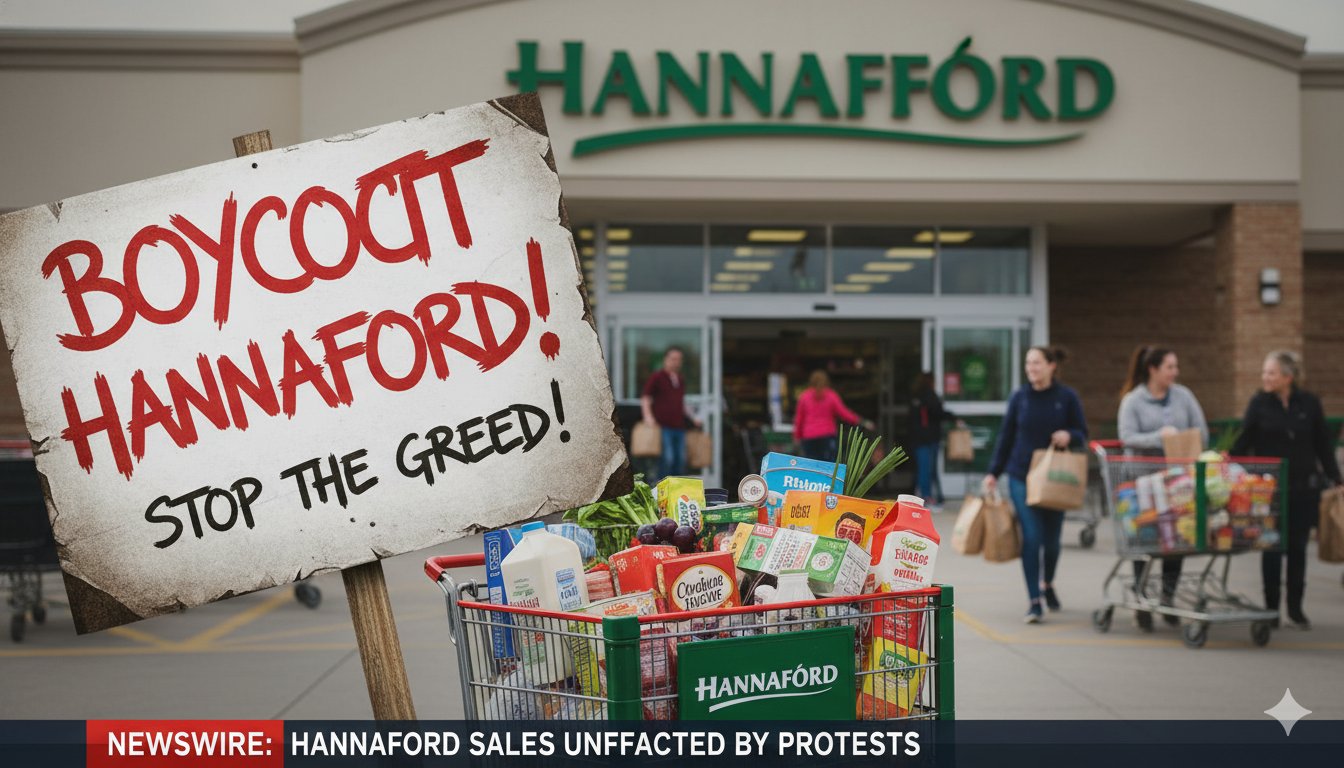
An organized, multi-month advertising and protest effort targeting Hannaford Supermarkets has highlighted concerns over pricing, product quality, and corporate ownership, yet the chain shows no signs of meaningful business disruption. Shoppers in core markets remain largely unaware or unmoved, underscoring the resilience of established regional players amid ongoing grocery sector pressures.
Hannaford Weathers Sustained Pressure Campaign Without Noticeable Sales Erosion
Months after the launch of the “What Happened to Hannaford?” initiative by the Pennsylvania-based New England Consumer Alliance, the Maine-founded supermarket chain continues to maintain steady operations across its footprint in the Northeast. The campaign, which has deployed television commercials, digital ads, direct mailers, website testimonials, and occasional in-store protests, has focused on a range of criticisms including elevated pricing in lower-income communities, perceived declines in food quality, frequent product recalls, continued sale of caged animal products, and the influence of foreign ownership through parent company Ahold Delhaize.
The effort began in the fall of 2025 with an emphasis on animal welfare, specifically Hannaford’s decision to extend its timeline for transitioning to cage-free eggs from an original 2025 target to 2032. Organizers quickly broadened the scope to affordability and operational practices. They have highlighted alleged “Poverty Tax” dynamics, claiming identical grocery baskets cost more in economically challenged areas, and pointed to recent recalls involving items such as beef, baked goods, salads, and pasta due to issues like listeria, undeclared allergens, and foreign materials. Additional grievances include reports of spoiled produce, unclean stores, workplace dissatisfaction, and a past data security incident.
Despite these efforts, including at least $116,000 spent on television advertising in Southern Maine during the December-January period and high-profile placements during NFL playoff broadcasts, the campaign has not translated into observable declines in customer traffic or revenue for Hannaford. Interviews with shoppers in rural and small-town locations reveal low awareness of the organized push. Many customers cited limited alternatives in their communities, with some noting that even nearby competitors like Walmart or wholesale clubs do not fully replace Hannaford’s convenience and product assortment. Others expressed skepticism about the claims or maintained loyalty based on long-term shopping habits.
Hannaford has consistently pushed back against the accusations. Company representatives have stated that pricing variations stem from geographic, supply chain, and inventory factors rather than demographic targeting. They have emphasized their commitment to competitive pricing and community engagement, positioning the chain as a longstanding regional staple founded in 1883 and acquired by Ahold in 2000 before the broader Ahold Delhaize merger.
From a financial perspective, the absence of any reported sales impact aligns with the broader stability of Ahold Delhaize’s U.S. operations. The parent company, which operates Hannaford alongside brands such as Stop & Shop, Food Lion, and Giant, has not signaled any material disruption tied to the campaign in public disclosures. Ahold Delhaize’s American Depository Receipt (ADRNY) closed at approximately $39.26 in late January 2026, reflecting a relatively steady performance in recent months. The company is scheduled to release its fourth-quarter and full-year 2025 financial results on February 11, 2026, providing further insight into U.S. segment trends amid persistent inflationary pressures on food retailing.
The campaign’s limited traction may reflect several structural realities in the Northeast grocery market. Hannaford holds a dominant position in Maine, operating 68 stores from York to Fort Kent, often serving as the primary or sole full-service grocer in smaller communities. This geographic entrenchment reduces the effectiveness of boycotts or awareness drives, as consumers frequently lack viable alternatives without significant travel. Broader industry dynamics, including ongoing food inflation and competitive pricing from discounters, have already conditioned shoppers to navigate higher costs, potentially blunting the appeal of targeted criticism.
The New England Consumer Alliance, operating under the Center for Responsible Food Business, has framed Hannaford as an initial focus in a larger push to reform agribusiness practices. The group has received funding from sources including the Good Ventures Foundation, which has ties to animal rights initiatives. Organizers have indicated that the campaign will continue monitoring responses and potentially expand efforts, though they acknowledge that systemic change in grocery retailing will require sustained pressure.
Hannaford’s ability to absorb the criticism without apparent commercial fallout highlights the challenges activist groups face when challenging entrenched regional retailers. In markets with concentrated store networks and strong brand familiarity, shifts in consumer behavior often require more than advertising and public relations efforts—they demand readily accessible substitutes and widespread adoption of the message.
Disclaimer: This report is for informational purposes only and does not constitute investment advice, financial recommendations, or endorsements. Market conditions can change rapidly.