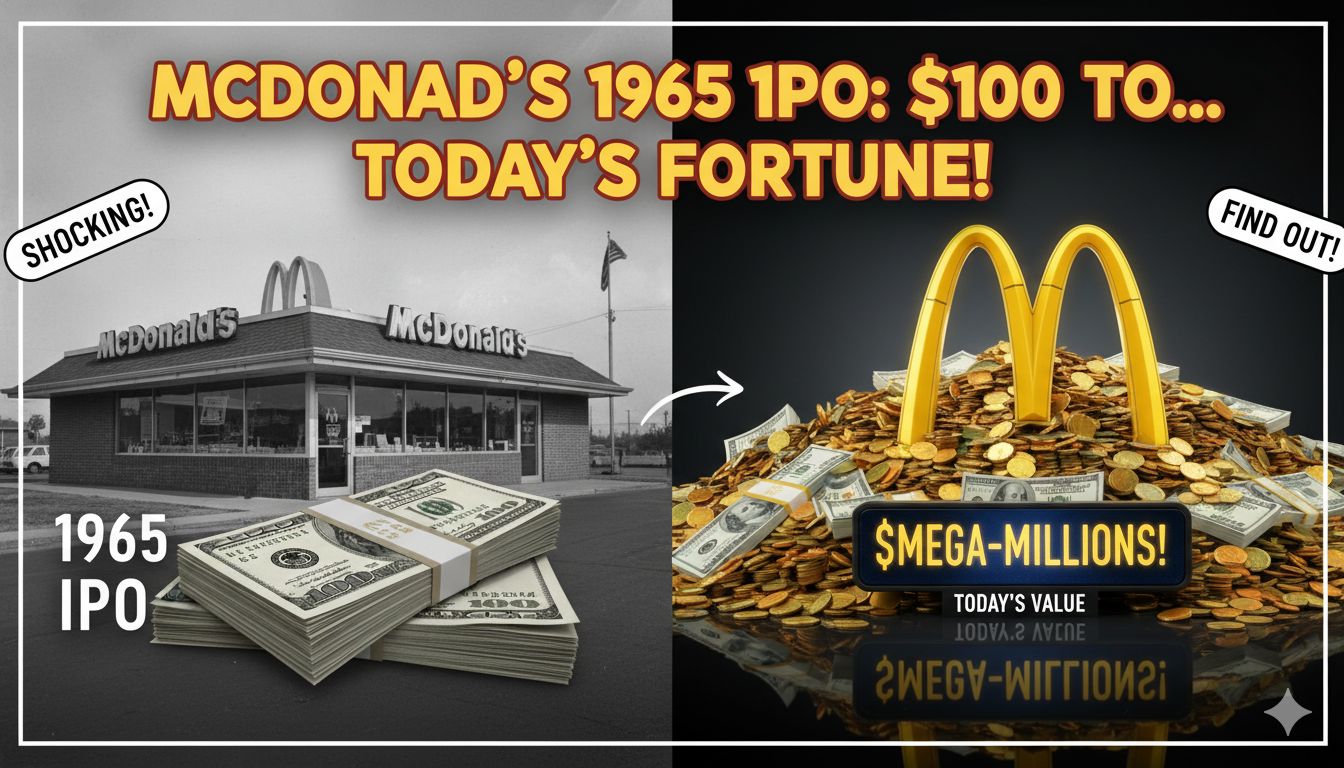
A modest $100 investment in McDonald’s at its 1965 IPO price of $22.50 per share would have purchased about 4.44 shares. After accounting for 12 stock splits over the decades, those shares would have multiplied to roughly 3,237 shares today. At the recent closing price of around $315 per share, that position would now be worth approximately $1,021,306—representing a staggering capital appreciation of over 1,051,600%. Beyond share price growth, the company’s consistent dividend increases would generate substantial ongoing income for long-term holders.
The Remarkable Journey of a $100 McDonald’s Investment Since 1965
When McDonald’s Corporation went public on April 21, 1965, the offering price was $22.50 per share. This marked the beginning of a new era for the fast-food chain that had already begun transforming the American dining landscape under Ray Kroc’s leadership. For a hypothetical investor who allocated $100 to the IPO, the purchase would have amounted to approximately 4.44 shares (100 divided by 22.50).
Over the subsequent six decades, McDonald’s stock has delivered extraordinary growth through a combination of operational expansion, consistent profitability, and shareholder-friendly corporate actions. One of the most powerful drivers of this performance has been the company’s history of stock splits. McDonald’s has executed 12 stock splits since going public, each designed to make shares more accessible to a broader range of investors while rewarding long-term holders.
These splits have dramatically increased the number of shares held by early investors. The original 4.44 shares have compounded through these events to total roughly 3,237 shares today. This multiplication effect, combined with substantial share price appreciation, illustrates the power of compounding in a high-quality growth business.
At the most recent market close of $315 per share, the value of those 3,237 shares stands at approximately $1,021,306. This represents a return on the initial $100 investment of more than 10,000 times the original amount when considering price appreciation alone. The share price itself has risen by over 1,051,600% since the IPO, turning a single dollar invested into more than $10,500 in capital value.
Key Drivers Behind the Performance
McDonald’s transformation from a regional chain to a global powerhouse has been central to its stock success. The company expanded aggressively both domestically and internationally, introducing standardized operations, innovative menu items, and efficient franchising models. This growth translated into steadily rising revenues, earnings, and cash flows that supported both reinvestment in the business and returns to shareholders.
The company’s financial metrics reflect this durability. McDonald’s boasts a strong gross margin profile, efficient capital allocation, and a massive scale that provides competitive advantages in purchasing, marketing, and real estate. These factors have allowed the company to weather economic cycles, changing consumer preferences, and competitive pressures while continuing to generate robust free cash flow.
The Role of Dividends in Long-Term Returns
While the headline figure focuses on capital appreciation, dividends have played an increasingly important role over time. McDonald’s initiated its dividend in 1976 and has increased the payout for 49 consecutive years, establishing it as one of the most reliable dividend growers in the market.
For the hypothetical investor holding 3,237 shares today, the annual dividend payout would amount to approximately $24,081 based on the current distribution rate. This income stream alone would provide a meaningful yield on the original investment cost, demonstrating how McDonald’s has rewarded patient shareholders through both growth and income.
The dividend yield currently hovers around 2.28%, which is attractive for a company with McDonald’s growth profile and stability. The combination of share price appreciation and rising dividends has made the stock a classic example of a compounder—where reinvested dividends over decades would have amplified total returns significantly beyond the price-only calculation.
Market Position and Future Outlook
Today, McDonald’s commands a market capitalization exceeding $224 billion, reflecting its status as one of the world’s most valuable consumer brands. The company’s digital initiatives, menu innovation, and focus on value have helped it maintain relevance in a rapidly evolving food industry. While challenges such as inflation, labor costs, and shifting consumer trends persist, McDonald’s proven track record of adaptation suggests it remains well-positioned for continued long-term performance.
This hypothetical $100 investment underscores the potential rewards of identifying high-quality businesses early and holding them through decades of growth, splits, and dividend increases. It serves as a powerful reminder of how patient capital allocation in exceptional companies can generate life-changing wealth.
Disclaimer This article is for informational and educational purposes only. It does not constitute investment advice, a recommendation to buy or sell any security, or a solicitation of any kind. Investing involves risk, including the potential loss of principal. Past performance is not indicative of future results. Always conduct your own research or consult a qualified financial advisor before making investment decisions.