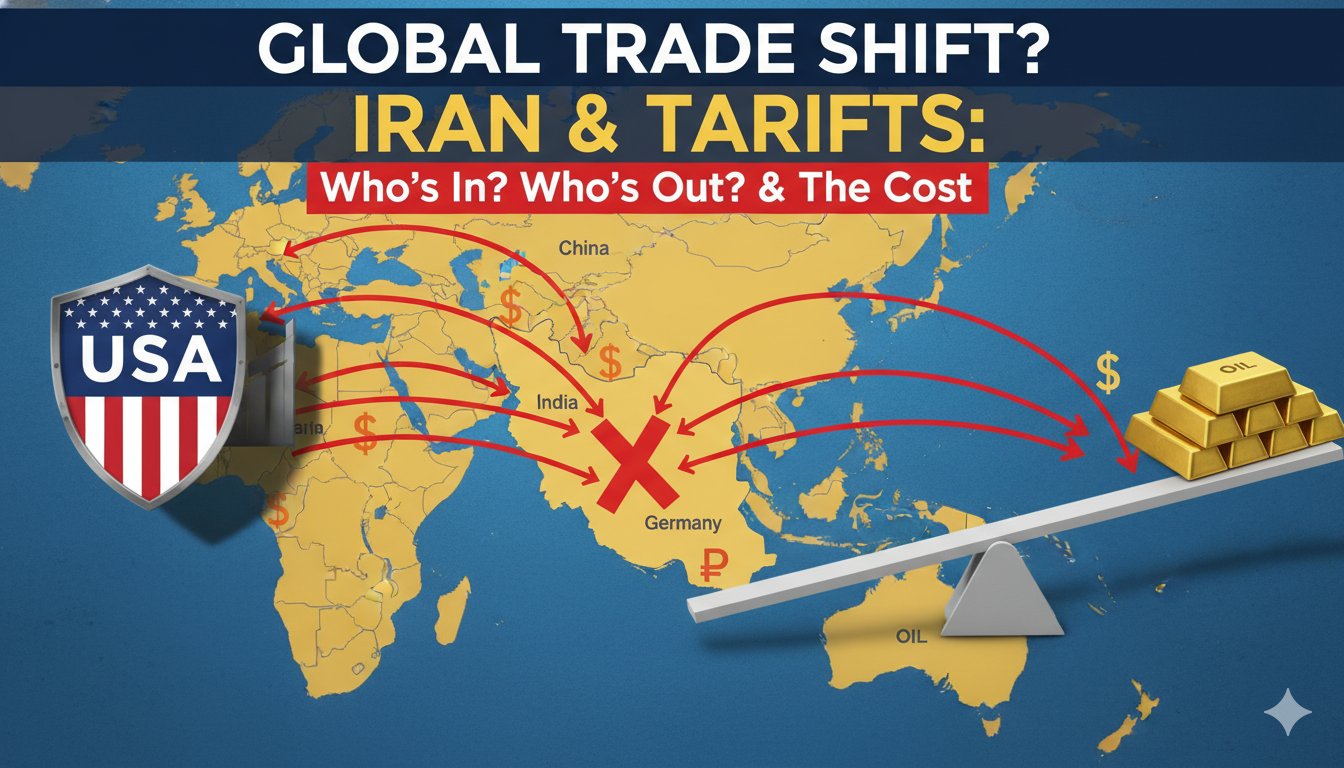
“The United States has introduced a 25% tariff on countries engaging in business with Iran, affecting key partners such as China, which dominates Iran’s oil exports, alongside India, Turkey, the UAE, and others; this policy could strain international supply chains, inflate costs for US consumers, and prompt shifts in global trade dynamics.”
Iran’s Major Trading Partners
Iran’s economy, heavily reliant on oil exports despite longstanding sanctions, maintains robust trade ties with a select group of nations willing to navigate geopolitical risks. These partnerships focus primarily on energy, commodities, and manufactured goods, with Asia emerging as the dominant region for bilateral exchanges.
In recent data, China stands out as Iran’s paramount trading ally, accounting for approximately 30% of total trade volume. Bilateral flows reached over $32 billion in the past year, with Iran exporting crude oil valued at more than $14 billion to China, which absorbed over 80% of Iran’s shipped petroleum products. In return, Iran imports machinery, electronics, and chemicals from China, bolstering its industrial sectors.
India follows as a significant partner, with trade totaling around $1.34 billion in the initial ten months of the fiscal period. India’s imports from Iran include petrochemicals and fertilizers, while it exports rice, pharmaceuticals, and engineering goods. This relationship has grown amid India’s energy needs, though it remains sensitive to international pressures.
Turkey represents about 9% of Iran’s trade, with exchanges exceeding $10 billion annually. Key exports from Iran to Turkey include natural gas and plastics, while Turkey supplies textiles, vehicles, and iron products. Proximity and historical ties facilitate this commerce, often conducted through barter arrangements to circumvent financial restrictions.
The United Arab Emirates (UAE) handles roughly 7.3% of Iran’s trade, serving as a re-export hub. Trade figures hover at $8 billion, involving Iranian hydrocarbons shipped to the UAE, which then redistributes them globally, alongside UAE exports of consumer goods and gold to Iran.
Other notable partners include Iraq, with border trade in electricity and construction materials amounting to $9 billion; Germany, focusing on machinery and pharmaceuticals at $2.5 billion; Pakistan, exchanging agricultural products and textiles for $1.2 billion; and Brazil, involved in food commodities like soybeans for Iranian oil, totaling $3 billion.
What US Tariffs Could Mean for Global Trade
| Country | Share of Iran’s Trade (%) | Annual Trade Value (USD Billion) | Key Iranian Exports | Key Imports to Iran |
|---|---|---|---|---|
| China | 30 | 32 | Crude oil, petrochemicals | Machinery, electronics |
| Turkey | 9 | 10 | Natural gas, plastics | Textiles, vehicles |
| UAE | 7.3 | 8 | Hydrocarbons | Consumer goods, gold |
| India | 5 | 1.34 (partial year) | Petrochemicals, fertilizers | Rice, pharmaceuticals |
| Iraq | 8 | 9 | Electricity, cement | Foodstuffs, machinery |
| Germany | 2 | 2.5 | Chemicals | Industrial equipment |
| Pakistan | 1.5 | 1.2 | Fruits, rice | Textiles, chemicals |
| Brazil | 2.5 | 3 | Oil | Soybeans, meat |
The imposition of a 25% tariff on nations conducting business with Iran introduces a layer of economic coercion aimed at isolating Tehran further. For the targeted countries, this levy applies to their exports to the US, potentially eroding profit margins and competitiveness in the American market.
China, with its vast $500 billion-plus trade surplus with the US, faces amplified risks. The tariff could add billions in costs to Chinese goods entering the US, prompting Beijing to diversify away from Iranian oil or negotiate exemptions. This might accelerate de-dollarization efforts, as China explores alternative payment systems to sustain ties with Iran.
India’s exposure is notable, given its $100 billion in US exports, including IT services and gems. A 25% hike could disrupt sectors reliant on affordable energy inputs from Iran, leading to higher domestic prices and slower growth projections.
Turkey, already grappling with inflation, exports $200 billion to the US annually in areas like automotive parts. The tariff threat may force Ankara to recalibrate its energy imports, possibly turning to costlier alternatives and straining its currency reserves.
For the UAE, a key US ally with $25 billion in exports to America, the policy creates a diplomatic tightrope. Dubai’s role as a trade intermediary could diminish, impacting logistics firms and free zones.
Broader ripple effects include elevated global oil prices, as reduced Iranian exports tighten supply. US consumers might see increased costs for imported goods from affected nations, contributing to inflationary pressures. Multinational corporations with operations in these countries could face compliance challenges, leading to supply chain rerouting and higher operational expenses.
Key sectors at risk encompass energy, where Iranian oil underpins affordable refining in Asia; manufacturing, with potential disruptions in component sourcing; and agriculture, as barter deals falter under tariff shadows.
Strategic Responses and Market Shifts
Nations like Brazil and Pakistan, with smaller US trade footprints, may absorb the hit more easily but could seek deeper regional alliances to offset losses. Germany, as an EU member, might leverage collective bargaining to mitigate impacts on its $60 billion US exports.
Overall, the tariffs could foster a fragmented trade landscape, encouraging sanctioned economies to form parallel networks outside US influence, such as through expanded BRICS mechanisms.
Disclaimer: This news report is for informational purposes only and does not constitute financial advice or investment tips. Readers should conduct their own research and consult professionals.