***”Mastercard’s Strive USA initiative leverages CDFI networks to expand capital access, digital tools, and expertise for small businesses, driving billions in loans and supporting millions of entrepreneurs through associations like OFN, Inclusiv, and ACC, with projections for increased funding deployment by 2026.”***
Community Development Financial Institutions stand at the forefront of bridging gaps in traditional banking, channeling resources to entrepreneurs who might otherwise be overlooked. These entities, numbering over 1,400 across the nation, include a mix of banks, credit unions, loan funds, and venture providers dedicated to low- and moderate-income areas. Their work extends beyond mere lending, incorporating coaching on financial management, marketing strategies, and operational efficiency to foster long-term viability.
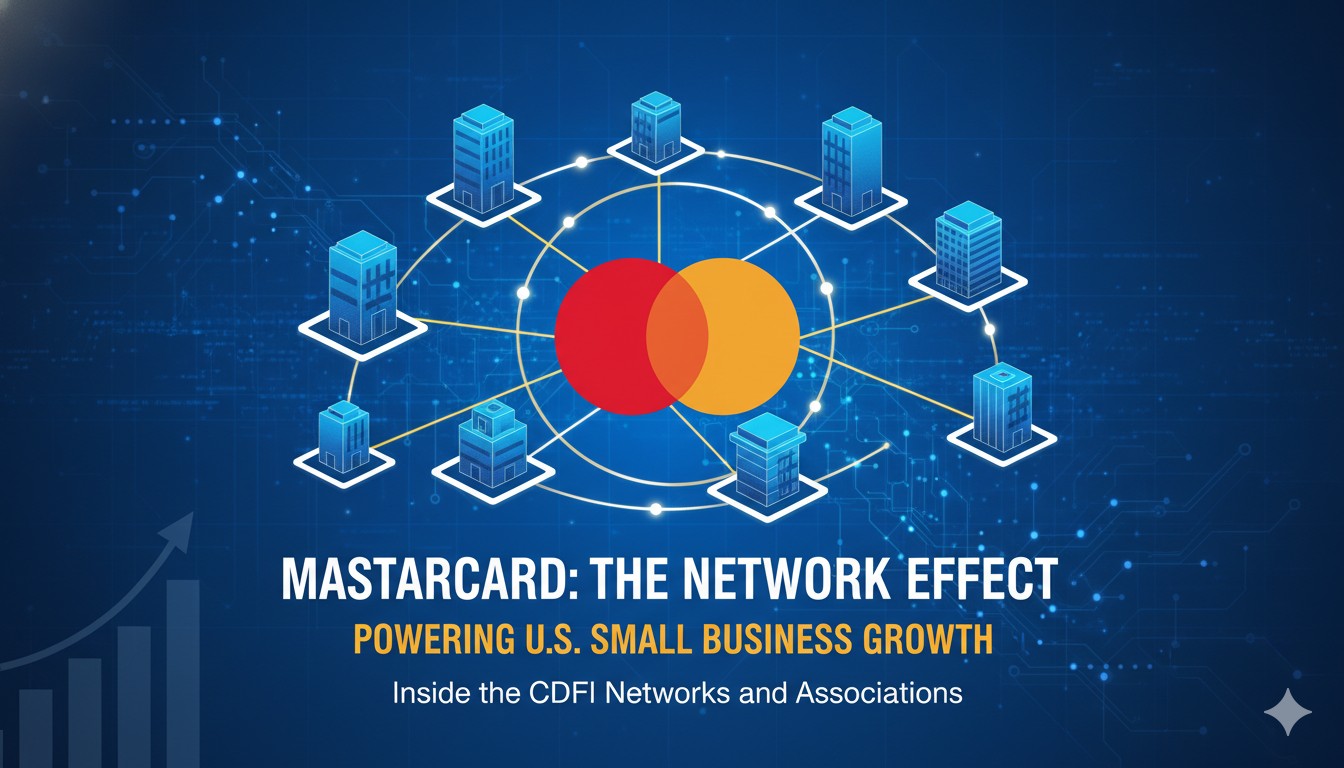
The true multiplier comes from CDFI networks and associations, which operate as hubs for collective action. These groups aggregate voices for policy influence, disseminate proven strategies, secure diverse funding streams, and facilitate collaborations that individual institutions might struggle to achieve alone. This interconnected structure creates a ripple effect, where innovations tested in one corner of the ecosystem can scale rapidly, benefiting a broader swath of small businesses. For instance, shared platforms allow for risk distribution, enabling smaller lenders to participate in larger deals without overextending their balance sheets.
Mastercard’s involvement amplifies this dynamic through its Strive USA program, which has unlocked nearly $48 billion in capital deployments and reached over two million small businesses by late 2025. The program emphasizes a three-pronged strategy: facilitating capital flows via community lenders, integrating digital solutions to streamline processes, and building knowledge-sharing partnerships. By aligning with CDFI networks, Mastercard adopts a one-to-many model, where support to a single association cascades to hundreds of members, enhancing efficiency and reach.
Key CDFI Networks and Their Operational Frameworks
Several prominent associations exemplify how networks drive systemic change. The Opportunity Finance Network serves as a national powerhouse with around 470 members, having facilitated more than $124 billion in financing to underserved rural, urban, and Native communities since 2023. This network not only mobilizes capital but also advocates for favorable policies and builds organizational capacity. Its Innovation Initiative focuses on piloting new financing models, attracting fresh investment sources, and incorporating advanced technologies such as ethical artificial intelligence for credit assessments and shared operational services. Seed support from Mastercard Strive USA for this effort is expected to elevate annual capital deployment from $1.07 billion in 2024 to $1.76 billion by 2026, directly expanding loan availability for small enterprises.
Inclusiv, encompassing over 500 credit unions and similar entities, prioritizes affordable capital for marginalized groups. Its Small Business Capital Initiative offers technical guidance, loan processing aid, and capacity enhancement, enabling members to extend more inclusive products. A standout feature is the Loan Participation Marketplace, which permits institutions to trade loan portions, optimizing liquidity. In one case, Inclusiv acquired a $980,000 loan pool from a Puerto Rican cooperative, freeing up resources for that entity to originate additional financing locally. This mechanism has proven effective in recycling capital within the network, supporting entrepreneurs in regions with limited banking options.
Regionally tailored networks like Appalachian Community Capital address specific geographic challenges. With about 40 member organizations, it provides streamlined access to funding, governance roles, and peer exchange forums. The Resilient Appalachia Data Initiative represents a data-centric evolution, offering analytics tools to inform lending decisions and promote sustainable practices. This platform has aided disaster recovery, such as directing relief to businesses impacted by severe weather events, and aims to direct over $15 million to at least 150 viable enterprises within an 18-month window. Such targeted interventions ensure that rural small businesses, often facing infrastructure deficits, can compete in broader markets.
The African American Alliance of CDFI CEOs takes an identity-focused approach, uniting leaders to tackle disparities through advocacy and specialized programs. Its Environment and Climate Technical Assistance effort equips members to fund clean energy projects and climate-resilient ventures, helping underserved businesses adapt to environmental shifts while accessing green capital. This initiative underscores how networks can align with emerging priorities, like sustainability, to open new growth avenues for entrepreneurs.
Data and Digital Integration in Network Strategies
Data plays a pivotal role in modernizing CDFI operations, with Mastercard’s partnerships introducing open finance tools for consented, secure information sharing. Collaborations like the one with Community Reinvestment Fund enable real-time transaction insights, replacing cumbersome manual reviews with dashboards that highlight borrower trends. This has allowed CDFIs to customize advisory services, predict repayment behaviors, and reduce default risks, ultimately benefiting over 25,000 businesses with $1.2 billion in deployments since 2020.
Digital adoption addresses longstanding barriers, such as high customer acquisition costs and thin margins. By leveraging platforms for automated underwriting and portfolio monitoring, networks help members serve more clients efficiently. For example, integrated systems have supported the creation of 4,826 jobs in rural areas through coaching and grant programs, demonstrating measurable economic uplift.
Partner Ecosystems and Collaborative Models
| Network/Association | Member Count | Key Initiatives | Capital Impact (Recent Figures) | Projected Growth |
|---|---|---|---|---|
| Opportunity Finance Network | ~470 | CDFI Innovation Initiative (new products, AI integration) | $124 billion financed since 2023 | $1.07B (2024) to $1.76B (2026) in annual deployment |
| Inclusiv | 500+ | Small Business Capital Initiative, Loan Participation Marketplace | $980,000 loan pool example in Puerto Rico | Enhanced liquidity for ongoing lending cycles |
| Appalachian Community Capital | ~40 | Resilient Appalachia Data Initiative | $15 million targeted to 150 businesses in 18 months | Expanded disaster relief and sustainable funding |
| African American Alliance of CDFI CEOs | Varies (CEO-focused) | Environment and Climate Technical Assistance | Support for clean energy loans | Increased access to green capital for underserved firms |
| Community Reinvestment Fund (Partner Example) | National support for hundreds | Digital platforms, federal funding deployment | $3.6 billion injected overall; $1.2 billion to 25,000+ businesses since 2020 | New state/regional loan programs |
Mastercard Strive USA’s network extends to 920 partners by 2025, including entities like Access to Capital for Entrepreneurs in Georgia, which combines loans with coaching for regional startups, and the Washington Area Community Investment Fund, focusing on urban technical assistance. Rural-focused groups such as Rural LISC have delivered over 4,500 hours of business advisory, hosted 189 workshops, and facilitated $775,000 in loans plus $120,000 in grants, contributing to job creation in underserved locales.
These collaborations foster hybrid models, blending philanthropic grants with bridge financing and long-term investments. For instance, low-barrier funds encourage experimental partnerships, while convenings in cities like Detroit promote strategic dialogue on ecosystem shifts. Emphasis on public-private alliances leverages federal resources, ensuring that networks can scale responses to economic volatility.
Measuring Broader Economic Contributions
Small businesses account for 43.5 percent of national GDP, employ nearly half the workforce, and generate 70 percent of new jobs since 2019. Yet, over 75 percent express concerns about credit availability. CDFI networks mitigate this by directing more than 25 percent of loans to high-poverty zones—double the rate of major banks. Through Mastercard-backed efforts, these associations have connected over 40 million enterprises, with 61 percent women-owned, to essential services.
Innovations in areas like minority-owned fintech support further the cause, providing mentorship and funding to scale inclusive solutions. Rural entrepreneurs, facing loan denial rates of 45 percent, benefit from tailored digital upskilling and community connections, turning local ambitions into sustainable operations.
Sustainability and Forward-Looking Adaptations
Networks are increasingly incorporating resilience factors, such as climate adaptation and digital equity. Programs that fund energy-efficient upgrades or broadband access help small businesses navigate rising costs and market disruptions. Data standardization across associations enables better impact tracking, informing policy and attracting more investors.
As these ecosystems evolve, the focus remains on flexibility—simplifying processes, educating stakeholders, and forging connections that empower entrepreneurs. This networked approach not only sustains growth but propels it, ensuring small businesses remain vital engines of prosperity.
Disclaimer: This article is for informational purposes only and does not constitute financial advice, investment recommendations, or endorsements. Readers should consult qualified professionals for specific guidance. Sources are based on publicly available information.